
Backtest
Settings Spreadsheet
We don’t provide a settings spreadsheet — and that’s by design. This page explains why dynamic optimization is superior to static settings.
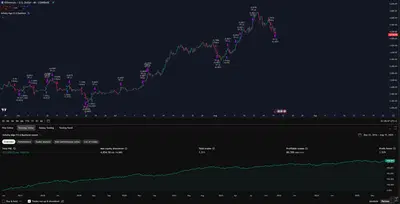
The Static Settings Trap
Why Spreadsheets Don’t Work
The Problem:
- Markets evolve daily
- Volatility changes
- Correlations shift
- Liquidity varies
The False Promise:
- “Best settings for BTCUSDT”
- “Copy my profitable settings”
- “Universal parameters”
- “Set and forget”
Real Market Example
The Solution: Dynamic Optimization
Static vs Dynamic Comparison
| Static Settings | Dynamic AI | Winner |
|---|---|---|
| Fixed parameters | Adapts every N bars | AI |
| Manual updates | Automatic optimization | AI |
| Works until it doesn’t | Continuously evolves | AI |
| One-size-fits-all | Personalized to metrics | AI |
| Hope markets don’t change | Responds to changes | AI |
How AI Optimization Works
Continuous Testing
AI tests thousands of combinations in the background
Performance Scoring
Each combination is scored by your chosen metric
Automatic Selection
Best-performing settings are applied automatically
Regular Updates
Process repeats every update cycle
What Actually Matters
Success Factors (Ranked)
1. Risk Management (40%)
- Position sizing
- Stop losses
- Portfolio balance
2. Market Context (30%)
- Trend identification
- Support/resistance
- Volume analysis
3. Psychology (20%)
- Discipline
- Patience
- Emotional control
4. Settings (10%)
- Just 10% of success!
The “Best Settings” Myths
Myth #1: High Win Rate = Profitable
90% Win Rate Strategy
- Win: $10 (90% of the time)
- Loss: $100 (10% of the time)
- Result: LOSING STRATEGY
30% Win Rate Strategy
- Win: $100 (30% of the time)
- Loss: $20 (70% of the time)
- Result: PROFITABLE
Myth #2: Copy Successful Traders
Why it fails:
- Different risk tolerance
- Different capital
- Different schedule
- Different psychology
- Different market conditions when they traded
Myth #3: Backtest = Future
The Better Way
Develop Your Edge
Easiest approach:
- Enable AI Optimization
- Select your metric
- Let it adapt continuously
- Focus on risk management
Time required: 5 minutes
Skill required: Minimal
Effectiveness: High
For hands-on traders:
- Test weekly
- Document what works
- Adjust for market conditions
- Never “set and forget”
Time required: Hours weekly
Skill required: High
Effectiveness: Variable
Focus Your Energy
Instead of searching for settings:
- Learn risk management
- Study market structure
- Practice with small size
- Build trading discipline
- Develop patience
Your time allocation:
- 60% Risk management
- 30% Market analysis
- 10% Settings/tools
Common Questions
But other indicators provide settings!
Most indicators are static tools without AI. They need manual settings because they can’t adapt.
Infinity Algo V3.0 has AI that makes static settings obsolete. It’s like comparing a manual camera (need to set everything) to a modern smartphone (auto-adjusts for perfect shots).
Can you just share what’s working now?
What’s working now:
- For me: Won’t work for you (different everything)
- Today: Won’t work tomorrow (markets change)
- On BTCUSDT: Won’t work on ETHUSDT (different behavior)
Instead: Use AI mode or test yourself weekly.
I found profitable settings, should I share?
Ask yourself:
- How long have they worked?
- In what market conditions?
- What’s the sample size?
- What’s the maximum drawdown?
If less than 100 trades across different conditions, it’s luck, not edge.